
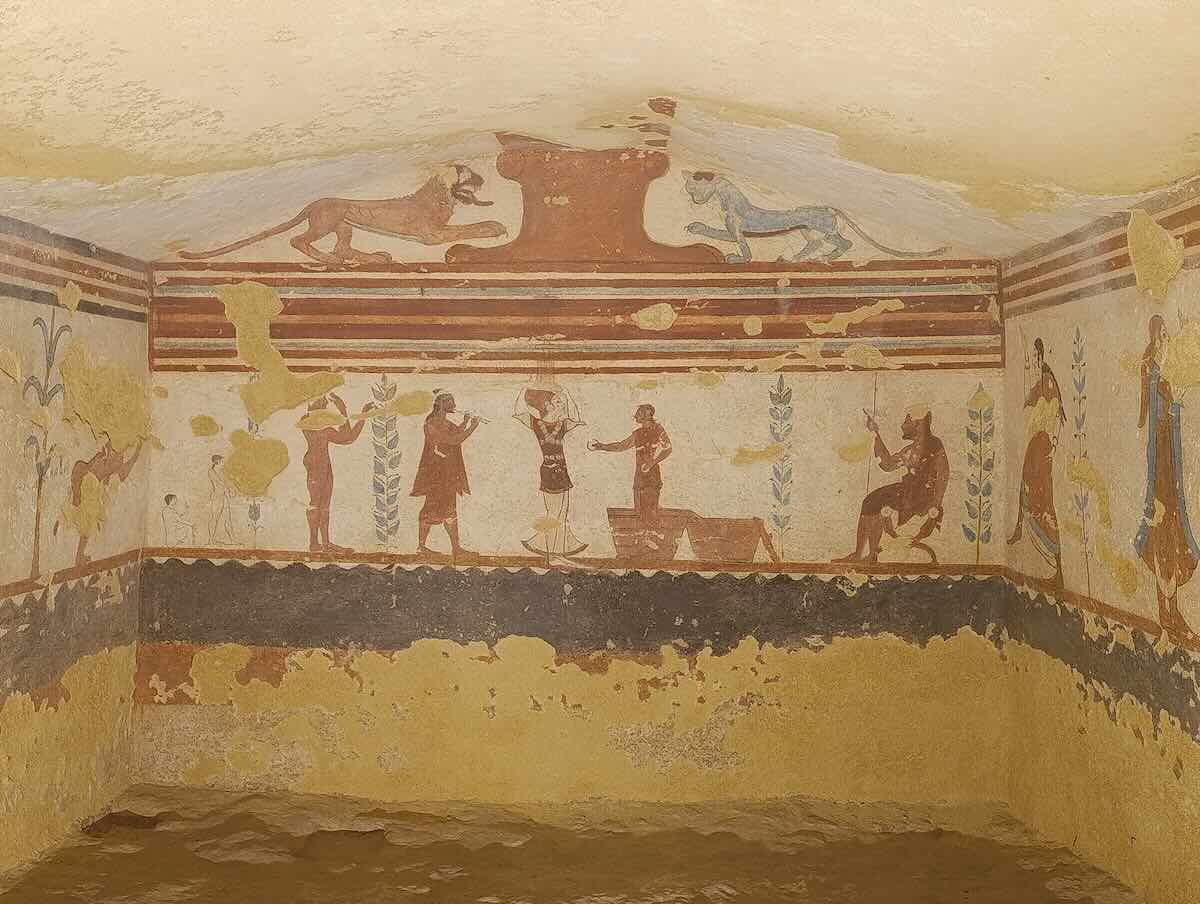
Just over an hour’s drive from Rome, the Etruscan Necropolis of Tarquinia holds a remarkable collection of ancient paintings, all of it hidden below ground. Of its thousands of tombs, 22 painted ones are open to visitors. I have visited it myself, and in this post I share what makes it so special, what you can actually see, and what to know before you go.
Why This Site Matters
The Monterozzi necropolis holds the largest and most important body of Etruscan painting that has come down to us. Its frescoes open a window on the customs of the Etruscan world, a civilization that left very few written records, and they are remarkably well preserved.
For context, the Etruscans were the great civilization that dominated central and northern Italy before the Romans. They also controlled important trade routes across the Mediterranean and enjoyed profitable commercial and cultural exchanges with the Greeks and the Carthaginians.
Where the Etruscan Necropolis Is
This is a place completely off the usual tourist routes, about 70 kilometers north of Rome and close to the border with Tuscany. Tarquinia is a small town near the Tyrrhenian Sea, with its own marina and several beach resorts along the coast. The archaeological site lies just outside the town.
A Hill of Tombs Facing the Sea
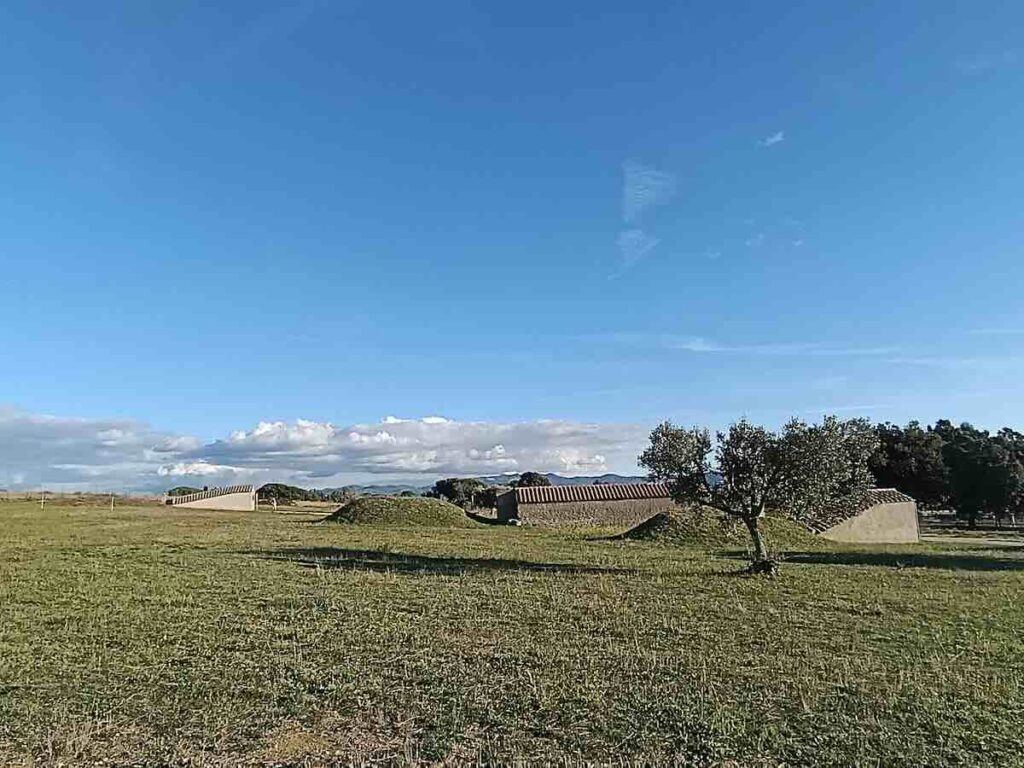
Monterozzi is a ridge roughly six kilometers long, lying between the Tyrrhenian shore and the Civita plateau, where the ancient Etruscan town was built. Archaeologists know of over six thousand burials here, nearly all of them underground rooms carved out of the rock, each originally topped by a small mound.
The name Monterozzi comes from these little hills. Ploughing has levelled almost all of them over time, yet as recently as a century ago you could still count more than 600. Today you will mostly notice a quiet, open landscape, and the real surprises are hidden below ground.
The First Chapter of Italian Painting
Roughly 200 of these tombs carry painted decoration, a concentration that has no rival elsewhere in the Mediterranean. The archaeologist Massimo Pallottino famously described these frescoes as the opening chapter of the history of Italian painting.
Other Etruscan centers also decorated aristocratic burials, yet nowhere else does the practice reach this scale or last as long. At Tarquinia it continues from the late 7th century BC well into the final centuries BC, for nearly the whole history of the city. Reading the walls, you follow how Etruscan art and taste changed over time.
What You Will See Inside the Tombs
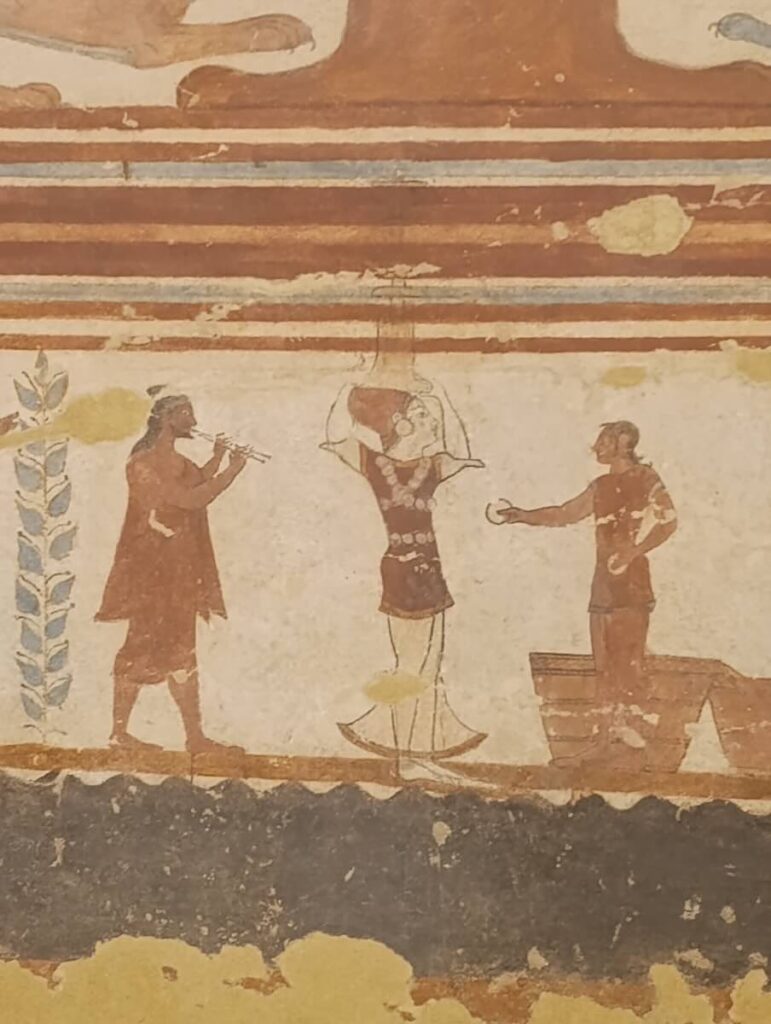
The paintings were made for aristocratic families, and they are far more than funerary decoration. They show the Etruscans at play, at the table and at work, which is why they are as valuable to historians as they are to art lovers. Among the scenes you can look for are:
- athletic games and juggling acts
- outings to hunt and to fish
- music and dance
- dinner parties, with guests reclining on couches
- wild beasts such as leopards and lionesses
- demons and other creatures from the underworld
The section of the necropolis open to the public offers 22 painted tombs. Some of the names alone give a sense of the variety: the Tomb of the Jugglers, of Hunting and Fishing, of the Leopards, of the Lionesses, of the Blue Demons and of the Flogging, among others.
How the Visit Works
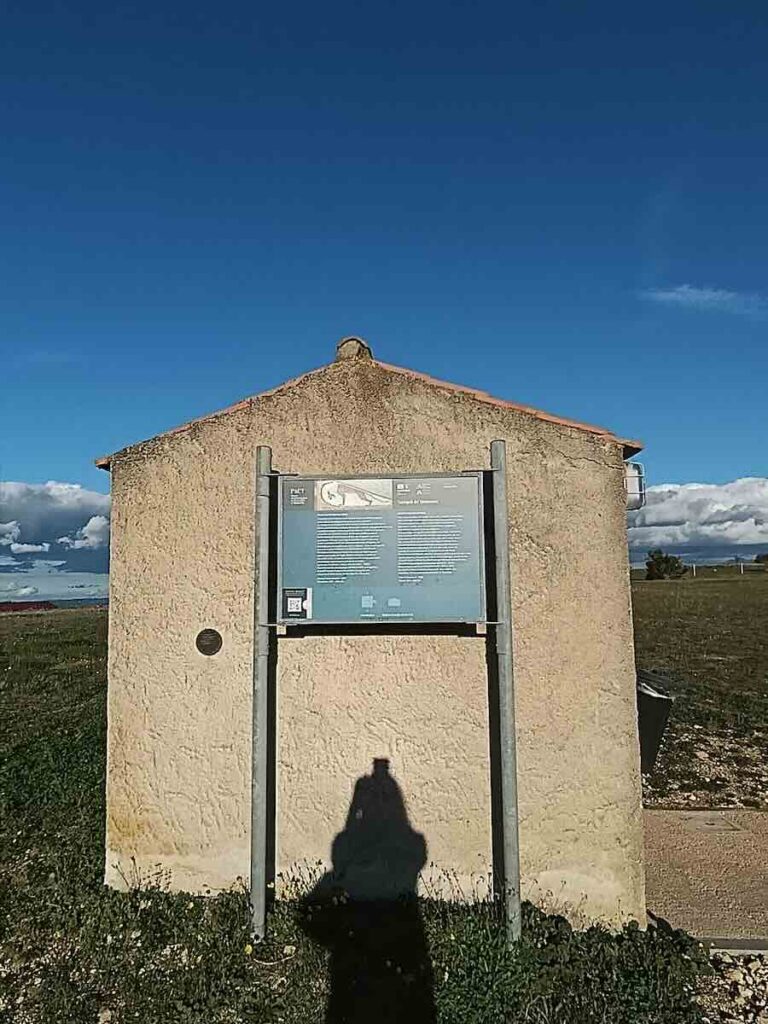
The archaeological site is an open, flat space, crossed by a path that winds past 22 small huts. These were added in recent times to mark the entrance to each underground tomb. Outside every hut, information panels explain the meaning of the frescoes found inside that tomb.
Stepping into a hut, you find a flight of stairs, roughly 15 to 25 steps, going down to a glass door. This is where you stand to admire the inside of the tomb. Next to the door there is a switch that lights up what used to be the burial chamber.
The stepped passage leading down to each tomb is known as a dromos. You do not walk into the chambers: the glass door lets you look in, and it also seals in the stable temperature and humidity that keep the frescoes safe.
Along the route you will also see QR codes: scan one with your phone to go virtually inside certain tombs and take a closer look at paintings that the doorway view hides. This service was introduced in 2023, so check at the site that it is still available.
A UNESCO World Heritage Site
In 2004, UNESCO inscribed the Etruscan necropolises of Tarquinia, together with those of Cerveteri, on the World Heritage List. The finds from the necropolis and from the ancient city are displayed in the National Archaeological Museum of Tarquinia, a perfect companion to your visit (see the tips below).
Tips for Explorers
Accessibility
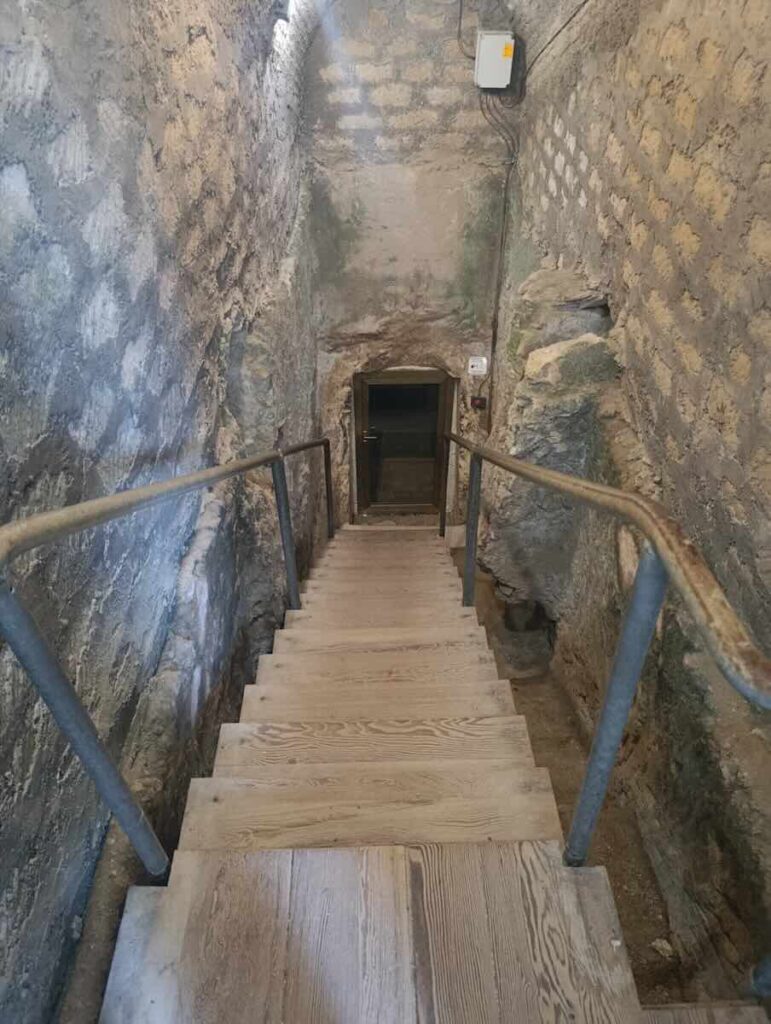
The open area of the site is accessible to wheelchairs and strollers, and so are the picnic tables and the restrooms. The flights of stairs leading to the painted tombs, however, are not yet accessible. Visitors with mobility difficulties should keep this in mind: to see all 22 tombs, you have to take 22 flights of stairs.
Best Time of the Year to Visit
I recommend avoiding the hottest months, because the site has very few trees and little shade. The shoulder seasons, spring and autumn, are ideal.
What to Bring
Wear comfortable shoes and avoid high heels, since you will walk along the path and go up and down many flights of stairs. Bring water and some snacks. The site has tables and benches where you can enjoy a packed lunch. There may be vending machines on site, but they were out of service when we visited.
Getting There
By public transport, take a train to Tarquinia station, then a local bus to cover the remaining 5 kilometers to the archaeological site.
Where to Stay
Consider staying in the historic center of Tarquinia or in Marina di Tarquinia, where you also have access to one of the most beautiful beaches near Rome.
Visit the Museum
While you are in Tarquinia’s historic center, also visit the beautiful and spacious National Archaeological Museum of Tarquinia, housed in Palazzo Vitelleschi, an elegant Renaissance palace. It holds most of the finds from the Etruscan necropolis, including precious grave goods, painted vases, sculptures and carved sarcophagi.
Combine It with Cerveteri
The site is linked to the Etruscan Necropolis of Cerveteri, about 30 kilometers further south, and you can buy a combined ticket to visit both. I would not recommend seeing them on the same day, though, because each one takes several hours and plenty of energy. The good news is that the combined ticket costs €18 and is valid for 4 months from the date of issue, so you can take your time!